
In 2025, SMS scams have evolved into sophisticated deception tactics that can fool even the most cautious users. Scammers increasingly impersonate trusted companies like MexQuick to exploit the credibility these brands have established. These fraudulent messages often create a false sense of urgency, prompting recipients to click malicious links or share sensitive information without thinking twice.
The rise in SMS scams targeting MexQuick users represents a broader trend in cyber fraud, where criminals adapt their techniques to bypass improved security measures. As digital transactions become more commonplace, scammers find new opportunities to exploit the trust between companies and their customers.
This guide will help you understand how these scams work, recognize the warning signs, and take appropriate action if you receive suspicious messages claiming to be from MexQuick. Remember, your awareness is the first and most effective line of defense against these increasingly sophisticated attacks.
SMS scams impersonating MexQuick often create a false sense of urgency to trick users
What Is an SMS Scam?
SMS scams, also known as “smishing” (a combination of SMS and phishing), are fraudulent text messages designed to trick recipients into revealing personal information, financial details, or login credentials. Unlike email phishing which has been around for decades, SMS scams exploit the immediacy and personal nature of text messages.
These scams work because text messages typically have higher open rates than emails—most people read texts within minutes of receiving them. Additionally, the limited display capabilities of text messages make it harder to identify suspicious elements that might be more obvious in emails.
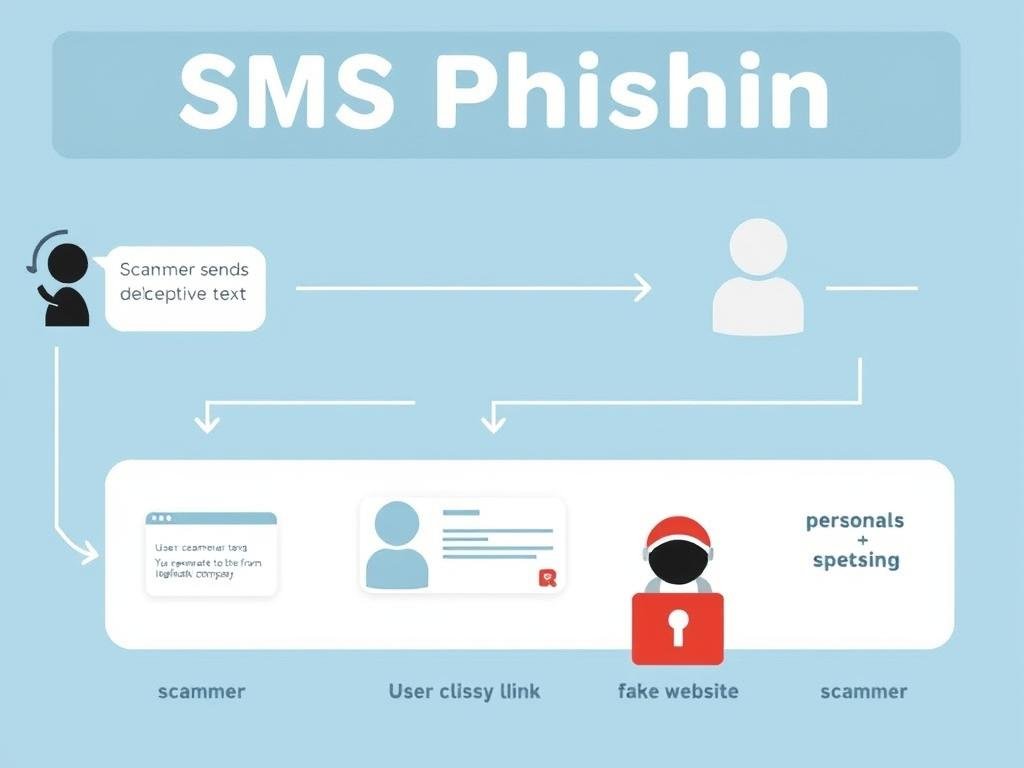
The anatomy of an SMS phishing attack
In 2025, global SMS fraud has reached unprecedented levels, with financial losses exceeding $12 billion annually. The Federal Communications Commission reports that SMS scams have surpassed voice calls as the most common form of mobile communication fraud, with an estimated 127 million Americans receiving at least one fraudulent text message each month.
What makes these scams particularly effective is their ability to bypass traditional spam filters. While email services have sophisticated systems to detect phishing attempts, text message filtering is still catching up. This gap in protection, combined with the trust many people place in text messages, creates a perfect opportunity for scammers.
Key Fact: According to cybersecurity experts, SMS scams have a success rate nearly three times higher than email phishing attempts, making them particularly dangerous for unsuspecting users.
How Scammers Impersonate MexQuick
Scammers have developed several sophisticated methods to impersonate MexQuick in their fraudulent SMS campaigns. Understanding these patterns can help you quickly identify and avoid potential scams.
Common Impersonation Tactics

Fake delivery notification scam
Scammers typically use one of these approaches when impersonating MexQuick:
- Delivery notifications: Messages claiming your MexQuick package requires additional payment or verification
- Account security alerts: Warnings about suspicious activity requiring immediate verification
- Refund offers: Messages promising refunds for overpayment or service issues
- Verification requests: Urgent demands to verify account details to prevent service interruption
Sample Scam Messages
Example 1: “Your MexQuick delivery is pending. Confirm payment now: [fake link]”
Example 2: “MexQuick: Your account will be locked in 2 hours. Verify your details here: [fake link]”
Example 3: “You’ve received a refund from MexQuick. Tap here to claim it: [fake link]”
Example 4: “MexQuick security alert: Unusual login detected. Confirm it’s you: [fake link]”
Psychological Manipulation Techniques
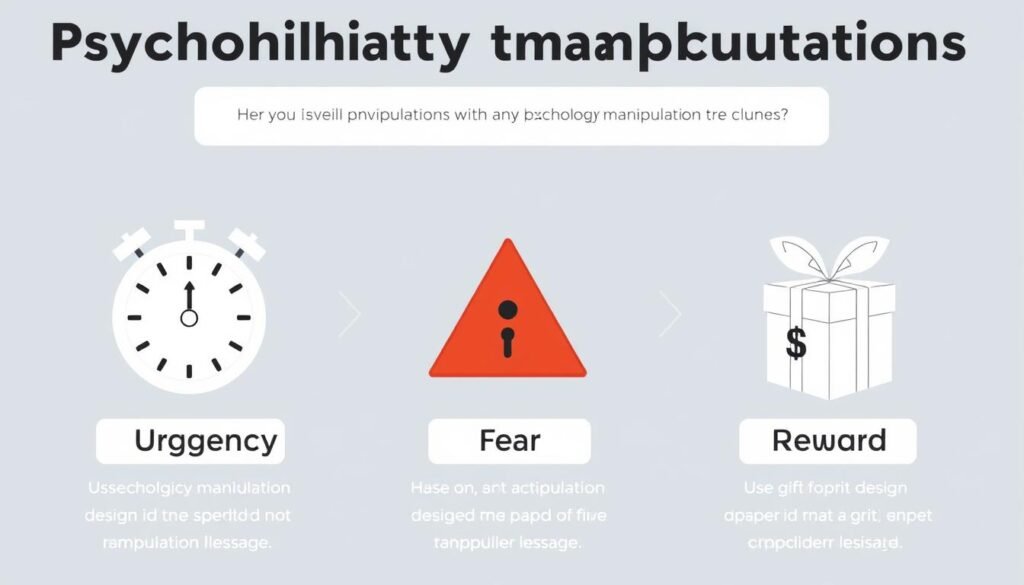
Psychological triggers used by scammers to manipulate victims
Scammers rely on three primary psychological triggers to manipulate victims:
Urgency
Creating artificial time pressure (“act within 2 hours”) to prevent victims from thinking critically or verifying the message’s legitimacy.
Fear
Triggering anxiety about account security, financial loss, or missed deliveries to cloud judgment and prompt immediate action.
Reward
Offering enticing benefits like refunds or discounts that seem too good to pass up, exploiting natural desire for gain.
Received a Suspicious Message?
If you’ve received a text claiming to be from MexQuick that seems suspicious, report it immediately to help protect yourself and others.
Red Flags That Indicate a MexQuick SMS Scam
Learning to identify the warning signs of fraudulent messages can save you from becoming a victim. Here are the key red flags to watch for in messages claiming to be from MexQuick:
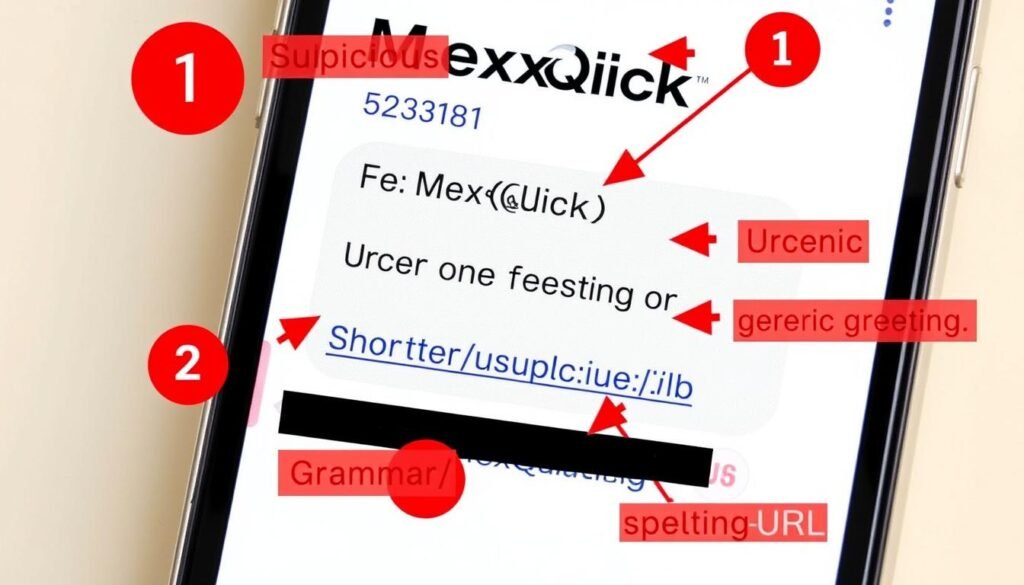
Key warning signs in a fraudulent MexQuick text message
Linguistic and Content Red Flags
- Poor grammar and spelling: Official communications undergo quality checks; errors often indicate scams
- Generic greetings: “Dear Customer” instead of your name suggests mass-sent scams
- Unusual urgency: Legitimate companies rarely demand immediate action via text
- Threats: Warnings about account suspension or penalties are typically scam tactics
- Requests for personal information: Legitimate companies don’t ask for sensitive details via SMS
Technical Red Flags
- Suspicious sender IDs: Random numbers or IDs that don’t match official MexQuick patterns
- Shortened URLs: Links that hide their true destination (bit.ly, tinyurl, etc.)
- Misspelled domains: Subtle variations like “MexQu1ck” or “Mex-Quick.com”
- Unusual request timing: Messages sent at odd hours (2 AM local time, for example)
- Different communication channel: If MexQuick typically contacts you via app but suddenly sends SMS
How Official MexQuick Messages Differ
Legitimate MexQuick Messages
- Come from verified sender IDs
- Address you by your registered name
- Never ask for passwords or full account details
- Include order/reference numbers for context
- Link to official domains only (mexquick.com)
- Provide customer service contact options
- Use professional, error-free language
Fraudulent Messages
- Come from random or spoofed numbers
- Use generic greetings (“Dear User”)
- Request sensitive information via text
- Lack specific details about your account
- Contain shortened or suspicious URLs
- Create artificial urgency to act immediately
- Often contain grammar or spelling errors
Pro Tip: When in doubt, never click links in text messages. Instead, manually type the official MexQuick website address in your browser and log in there to check for any notifications or account issues.
What to Do If You Receive a MexQuick SMS Scam
If you’ve received a suspicious text message claiming to be from MexQuick, follow these steps to protect yourself and help prevent others from becoming victims:
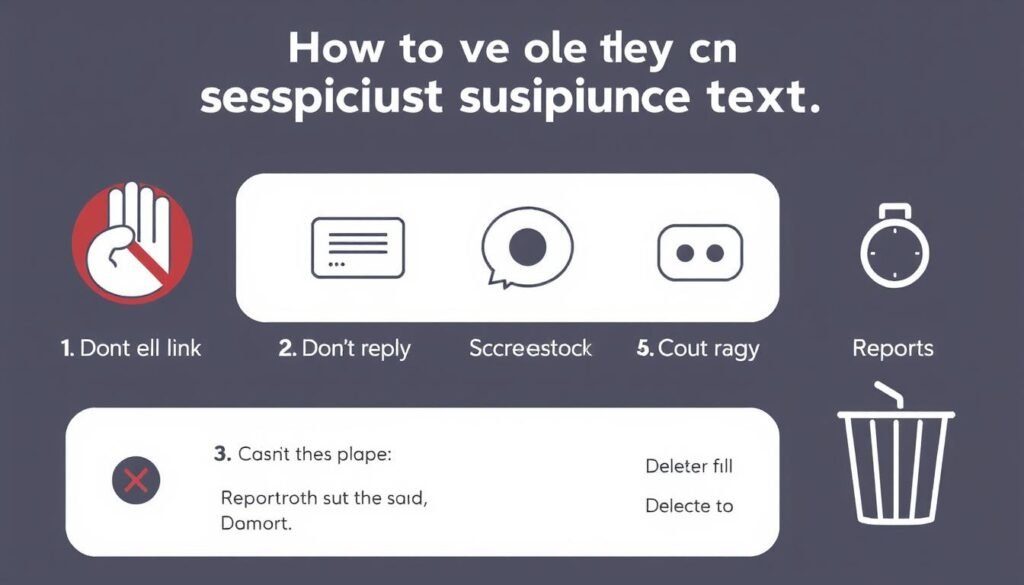
Follow these steps if you receive a suspicious message
Immediate Actions
Reporting the Scam
Report the suspicious message to:
- MexQuick directly through their official website’s contact form
- Your mobile carrier (most accept spam reports via text to 7726 or “SPAM”)
- Federal Trade Commission (FTC) at ReportFraud.ftc.gov
- Federal Communications Commission (FCC) at fcc.gov/complaints
- Internet Crime Complaint Center (IC3) at ic3.gov for scams involving financial loss
If You’ve Already Clicked a Link
If you’ve already clicked a link in a suspicious message or provided information:
- Change your passwords immediately, starting with your MexQuick account and email
- Enable two-factor authentication on all accounts where available
- Contact your bank or credit card company if you shared financial information
- Monitor your accounts for suspicious activity
- Consider placing a fraud alert on your credit reports
Official Clarification: MexQuick’s Position on SMS Communications
Understanding how MexQuick legitimately communicates with customers is crucial for distinguishing between authentic messages and scams. Here’s what you need to know about MexQuick’s official communication practices:
“MexQuick will never request sensitive information such as passwords, full account numbers, or personal identification details via SMS. Any message asking for this information should be considered fraudulent.”
MexQuick’s Official Communication Policies
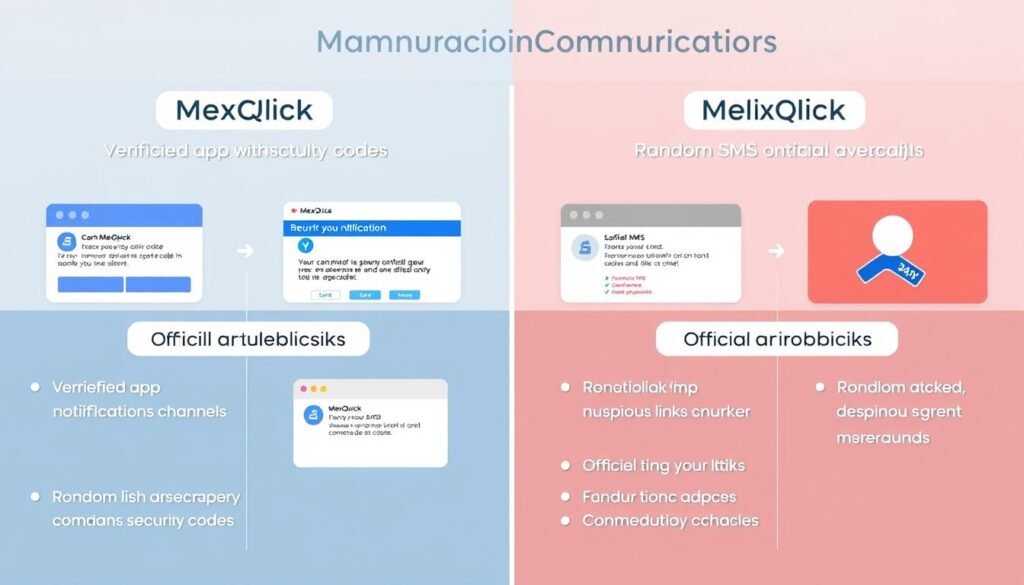
Official versus fraudulent MexQuick communication channels
What MexQuick Will Never Do:
- Ask for your password or PIN via text message
- Request payment information through SMS links
- Send messages with urgent deadlines to verify account information
- Ask you to download software or apps via text message links
- Send messages from non-official phone numbers or sender IDs
How MexQuick Actually Communicates:
- Sends notifications primarily through the official MexQuick app
- Uses consistent, verified sender IDs for any SMS communications
- Addresses you by your registered name, not generic terms
- Includes order-specific details when referencing transactions
- Directs you to the official website (always check the URL)
MexQuick’s Security Initiatives
MexQuick has implemented several measures to protect customers from scams:
- Anti-phishing verification codes in official communications
- Regular security bulletins warning about current scam techniques
- Dedicated security page on their website for verifying legitimate communications
- Partnership with cybersecurity firms to monitor and take down fraudulent sites
- Customer education campaigns about recognizing and avoiding scams
Verify Official Communications
Not sure if a message is really from MexQuick? Use our official verification tool to check.
How to Protect Yourself from MexQuick SMS Scams
Beyond recognizing and reporting scams, you can take proactive steps to shield yourself from becoming a target. Implementing these security practices will significantly reduce your vulnerability to SMS scams.
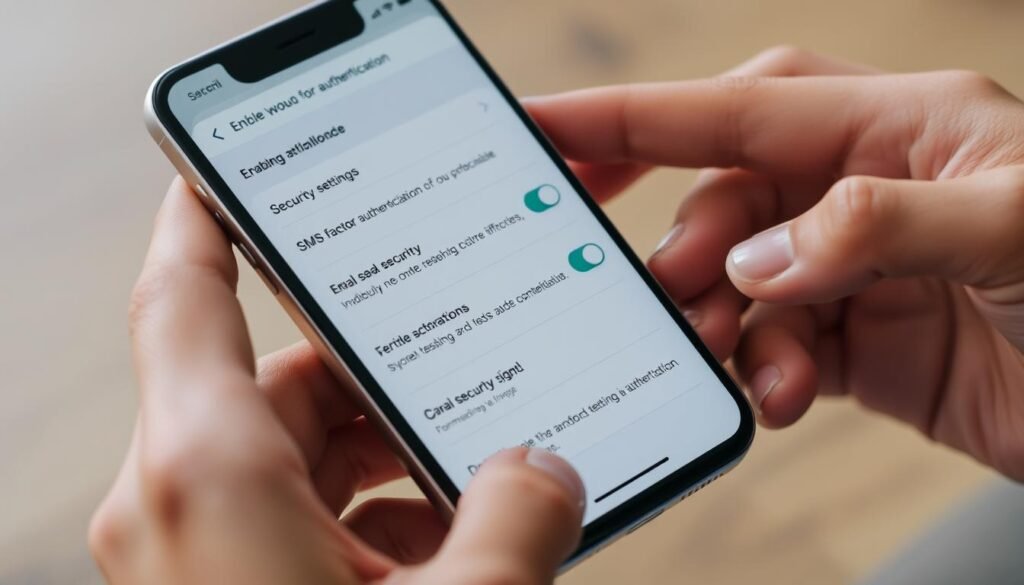
Enabling security features on your device can prevent many scam attempts
Essential Security Practices
On Your Device
- Enable spam filtering in your messaging app settings
- Update your phone’s operating system regularly for security patches
- Install a reputable security app that can detect and block scam messages
- Be cautious with permissions granted to apps, especially SMS access
With Your Accounts
- Use two-factor authentication on all accounts, especially financial ones
- Create unique, strong passwords for each online service
- Regularly check account activity for unauthorized actions
- Set up alerts for account changes or transactions
Verifying Legitimate Communications
When you receive a message claiming to be from MexQuick:
- Never act directly from the message. Instead, open your MexQuick app or visit the website directly by typing the URL.
- Check your account notifications within the official app—legitimate alerts will appear there.
- Call the official customer service number listed on MexQuick’s website if you’re unsure about a message.
- Verify sender information against MexQuick’s official communication channels list.
Educating Others
Protecting yourself is important, but scammers rely on finding vulnerable targets. Help strengthen community defenses by:
- Sharing information about scams with friends and family, especially those less tech-savvy
- Reporting scams to relevant authorities to help them track and shut down scammers
- Participating in cybersecurity awareness programs in your community
- Following and sharing updates from official security sources about new scam techniques
Stay Informed About Latest Scams
Sign up for our security alerts to receive updates about new scam techniques targeting MexQuick customers.
Staying One Step Ahead of MexQuick SMS Scams
As technology evolves, so do the tactics of scammers. Staying informed and vigilant is your best defense against SMS scams impersonating MexQuick and other trusted brands. The key lessons from this guide include:

Knowledge and vigilance are your strongest defenses against scams
- Trust your instincts — if a message seems suspicious, it probably is
- Verify independently — always contact MexQuick through official channels
- Stay informed about the latest scam techniques and warning signs
- Protect your devices with security updates and spam filtering
- Report suspicious messages to help protect others
Remember that legitimate companies like MexQuick will never pressure you to act immediately or share sensitive information via text messages. Taking a moment to verify communications can save you from significant financial loss and identity theft.
By implementing the security practices outlined in this guide and staying alert to the warning signs of scams, you can confidently navigate digital communications while keeping your personal information secure. Your awareness is not just your protection—it’s a contribution to the broader fight against cybercrime.
Download Our Complete Guide
Get our comprehensive guide to protecting yourself from all types of digital scams in 2025.