ETH Gas Fees Everything You Need to Know in 2025

Top 20 Coins
Click on coin symbol for more information.
Daily Winners/Losers
Click on coin symbol for more information.
ETH Gas Fees Everything You Need to Know in 2025

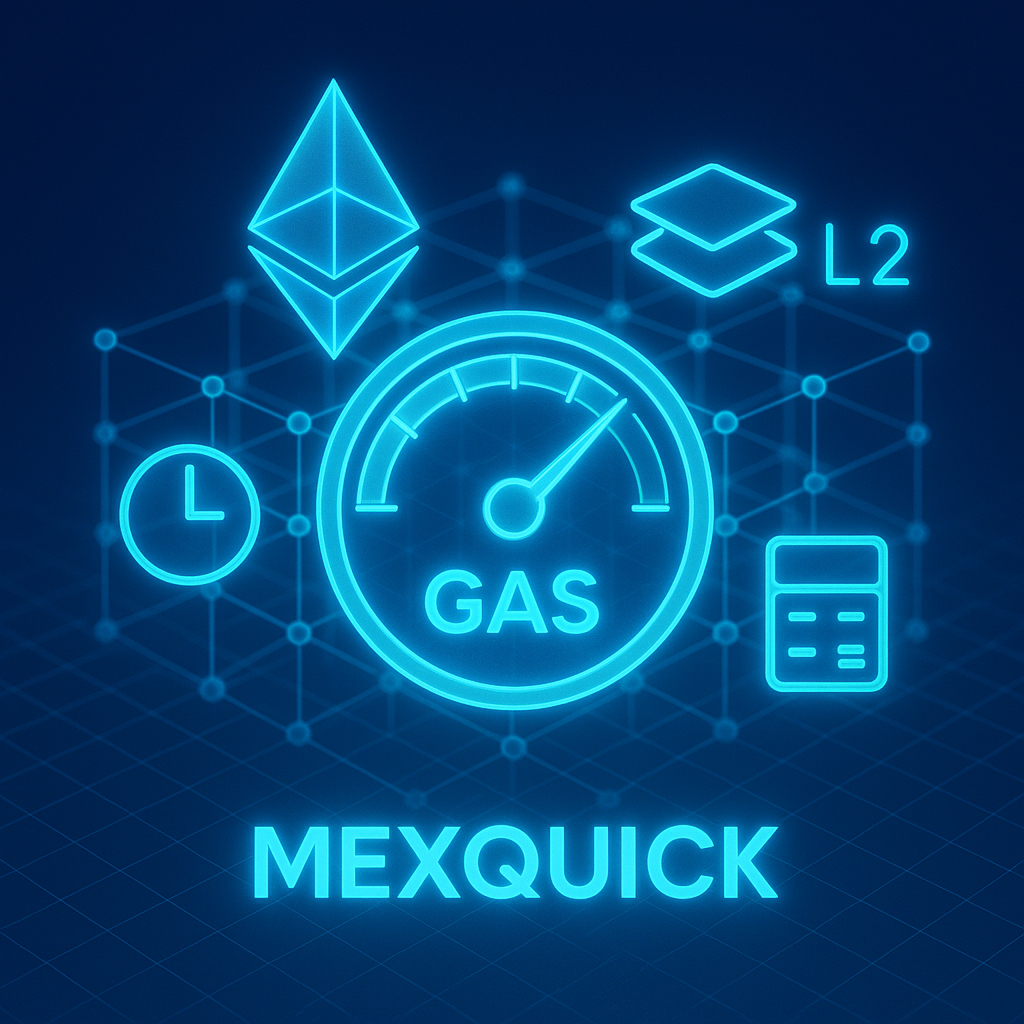
Gas fees are payments to network validators such as miners or stakers for processing transactions and securing the blockchain. These fees compensate for the computational work, energy and hardware required to process and secure your transaction.While their structure differs, this essential incentive model ensures network security and functionality across Ethereum and many other blockchains. Every transaction requires gas for two key reasons: to prevent network spam and to allocate limited block space fairly. If transactions were free, the network could be flooded with meaningless operations. Gas creates a natural market where users pay according to their urgency and the complexity of their request.

What Are ETH Gas Fees?

Ethereum gas fees are the fundamental transaction costs of using the Ethereum blockchain. Think of Ethereum as a global, decentralized computer that can execute code and process transactions. Every single operation whether it’s sending ETH to a friend, swapping tokens on Uniswap, or minting an NFT will consume computational resources. On Ethereum, the transaction fees are specially referred as gas fees or gas prices. Ether (ETH) is the native coin of Ethereum. All gas fees are paid using ETH. While simple transactions cost less fees, bigger operations will lead to a higher cost. ETH gas fees are set a direct function of supply and demand for the processing resources. Other blockchains like Solana and Binance Smart Chain also have unique fee models, with the same core driver: network demand.

Why Do ETH Gas Fees Fluctuate?

Yes, it fluctuates constantly, sometimes wildly within a single hour. This volatility is not a bug but a feature of Ethereum’s open, auction-style marketplace for block space. When demand for transactions exceeds the network’s immediate capacity (roughly 15–45 million gas per block, depending on complexity), fees rise.

The core causes of fluctuation are:

  1. Network Congestion: The fundamental driver. More users and more transactions mean fiercer competition for limited block space.

  2. Block Space Auction Model: Even post-EIP-1559, users can outbid each other with priority fees (tips) to get their transactions processed faster during busy periods.

  3. DeFi Activity: Complex, multi-step transactions from decentralized finance protocols like lending, borrowing, and yield farming consume massive amounts of gas. A popular new vault or farming opportunity can instantly clog the network.

  4. Meme Coin Hype & NFT Mints: When a viral new token launches or a highly-anticipated NFT collection mints, it creates a frenzy of simultaneous transactions. The “gas wars” that ensue can send fees to extreme levels as users desperately try to mint before a sell-out.

  5. MEV Bots: Maximal Extractable Value (MEV) bots run sophisticated algorithms to profit from reordering transactions in a block (e.g., front-running arbitrage opportunities). These bots often pay exorbitant priority fees to ensure their profitable transactions are included, driving up costs for everyone else.

In summary, it can continuously spike when the network demand exceeds the capacity of Ethereum. This dynamic creates a real-time financial marketplace on the blockchain, where your transaction’s speed is directly tied to the fee you’re willing to pay.

What Affects ETH Gas Prices?

Beyond immediate congestion, several broader factors influence ETH gas fee trends:

  • User Demand: The primary driver. Daily active users, transaction volume, and new wallet creation directly impact congestion.

  • Global Market Sentiment: In bull markets, speculative activity (trading, minting) increases, raising fees. In bear markets, network activity and fees often cool down.

  • Ethereum Upgrades: Protocol changes can significantly alter the fee landscape. For example, the Dencun upgrade (March 2024) introduced proto-danksharding, which drastically reduced data storage costs for Layer 2 rollups, indirectly lowering user costs on those networks.

  • Rollup Adoption: The long-term scaling strategy for Ethereum is the “rollup-centric roadmap.” As more users transact on Layer 2 networks (like Arbitrum, Optimism, Base), it reduces the burden on the main Ethereum chain (Layer 1), easing congestion and fee pressure.

  • L1 vs. L2 Activity: A critical shift in 2024-2025. High-frequency trading, gaming, and social interactions are increasingly migrating to L2s. Layer 1 Ethereum is becoming the secure settlement layer for large-value transactions and rollup proofs, while day-to-day activity happens affordably on L2s.

Despite frustating, these factors highlight the importance solutions which process transactions securely and efficiently.

2022 to 2025: Do ETH Gas Prices Go Down?

This is a nuanced question. Yes, average gas prices on Ethereum Layer 1 can and do go down from peak highs, but they are unlikely to reach permanently low levels due to its role as a premium, secure settlement layer. The trend from 2022-2025 is defined by a strategic shift, not just lower numbers.

The Ethereum Merge (September 2022)

Fundamentally, Ethereum relies on Proof of Work (PoW) to validate and add transactions to its blockcahin.  However, in September 2022, Ethereum merged with Beacon which leading to the transition to Proof of Stake (PoS). This transition reduced Ethereum’s energy consumption by ~99.9%. It was a monumental feat for sustainability but was not designed to lower gas fees. Its goal was to set the stage for future scaling upgrades.

The Dencun Upgrade (March 2024)

This was the pivotal moment for user-visible fee reduction. Its key feature, proto-danksharding (EIP-4844), introduced “blobs”—a new, cheap data storage space for rollups. Almost overnight, transaction fees on major L2s like Arbitrum and Optimism fell by 80-90%, often to fractions of a cent.

The 2025 Outlook

Expect continued volatility on Ethereum L1 during major events (NFT mints, airdrops, market volatility). However, the average user’s experience with “ETH gas fees” is fundamentally changing. For most, “paying gas” will mean using an L2 where fees are consistently low. The narrative is shifting from “Ethereum is expensive” to “Ethereum’s ecosystem offers a range of options, from premium L1 security to ultra-low-cost L2 speed.”

Lowest Time of The Day

Gas fees follow predictable daily and weekly cycles driven by global human activity. While spikes can happen anytime, historical patterns show clear trends.

Cheapest Hours

Typically during the early morning hours in Asia (UTC+8), roughly between 10 PM and 6 AM UTC. This coincides with late night in Europe and the evening in the Americas, a period of relatively low coordinated activity across all major financial markets.

Weekend Effect

Saturdays and Sundays, especially Sunday mornings (UTC), often see lower average fees as institutional and heavy trading activity slows down.

Most Expensive Hours

Usually during overlapping buiness hours of the US and Europe (approx. 1 PM to 5 PM UTC), when DeFi protocols, trading desks, and development teams are most active.

Why Timing Matters

For non-urgent transactions like claiming staking rewards, adjusting a long-term liquidity position, or minting an NFT without time pressure, scheduling your transaction during low-activity windows can save significant money. Most wallet software allows you to view the current gas market before broadcasting. Important Caveat to take: this pattern can be instantly overridden by a major market move or a surprise event like a popular airdrop claim.

How to Calculate ETH Gas Fees

You don’t need to be a mathematician. The formula is simple. Your wallets do the heavy lifting, but understanding it empowers you to avoid overpaying. Gas fees are calculated by two main components: gas unit and gas price.

The Formula:
Total Transaction Fee = Gas Used × (Base Fee + Priority Fee)

  • Gas Used: The actual computational units your transaction consumed. This is determined by its complexity.

  • Base Fee: Set by the network (in Gwei). You can see it on any block explorer.

  • Priority Fee: The tip you choose (in Gwei).

Example in Steps:

  1. You want to swap tokens. Your wallet estimates a Gas Limit of 150,000 units (a safety limit).

  2. The current network Base Fee is 15 Gwei. You add a Priority Fee of 2 Gwei to get in the next block.

  3. Your Max Fee per gas is therefore 17 Gwei.

  4. Your transaction executes and actually uses 145,000 gas.

  5. Total Fee = 145,000 × (15 + 2) = 2,465,000 Gwei.

  6. Since 1 Gwei = 0.000000001 ETH, your fee is 0.002465 ETH.

Gwei or Gigawei in Ethereum Ecosystem

Gwei is a denomination of Ether (ETH), specifically equal to one billion wei (the smallest base unit) or 0.000000001 ETH. Its primary function is in calculating Ethereum gas fees, offering a convenient way to denote the transaction costs paid to network validators. It is also known as a “shannon,” named after Claude Shannon, the foundational figure in information theory. In simple words, Ethereum’s gas fees are priced in gwei.

How to Avoid High Gas Fees

You can’t eliminate fees, but you can manage them strategically and opt for cheaper alternatives.

  1. Use Layer-2 (L2) Networks: This is the single most effective strategy. Networks like Arbitrum, Optimism, Base, and zkSync offer Ethereum-level security with fees that are 10-100x cheaper. For most activities—trading, lending, gaming—using an L2 is the default smart choice in 2025.

  2. Time Your Transactions: As discussed, schedule non-urgent transactions for weekends or off-peak hours (Asia morning/Europe night).

  3. Adjust the Priority Fee: For non-critical transactions, manually set a low or zero priority fee. It may take longer, but it will confirm when the base fee drops.

  4. Batch Transactions: Use smart contracts that allow multiple actions in one transaction (e.g., approving and swapping, or claiming multiple airdrops). This pays the base fee only once for multiple operations.

  5. Use Gas-Efficient DEX Aggregators: Platforms like 1inch or Paraswap find the most efficient trading route across multiple liquidity pools, potentially saving on gas costs versus going directly to a single DEX.

  6. Avoid Peak Gas Events: If you can, steer clear of the network during highly publicized NFT mints, airdrop claims, or major protocol launches. A little patience can save a lot.

One less common startegy involved gas tokens. There were tools to let users essentially pre-pay for gas when prices are low, then use the gas laterwhen the fees spiked. It’s like buying gas for your car when it’s cehap and storing it for using it later. However, Following major network upgrades like EIP-1559, this strategy has become far less effective and is rarely used in 2025. For most users, using Layer 2 networks are more practical and reliable for managing costs.

The Bottom Line

ETH gas fees serve an essential function, preserving both the security and performance of the network. They ensure validators are fairly compensated, discourage spam activity, and keep transaction processing stable. Though they rise and fall with the network demand, users are not powerless. By using live gas trackers, adopting Layer-2 solutions, and transacting during quieter hours, you can significantly reduce costs while participating confidently in the Ethereum ecosystem.

2025 Outlook

Expect Ethereum L1 to remain a secure, occasionally expensive settlement layer for high-value transactions and rollup anchors. The user experience, however, will be defined by a seamless, low-cost landscape of L2s and scaling solutions. Gas fees haven’t disappeared, but they have been democratized. The key to navigating this world is no longer just watching Gwei charts, but choosing the right layer for the right transaction.

FAQ’s

Q: What is ETH transactin or gas fees?
A: On the Ethereum network, the terms transaction fee and gas fee are often used interchangeably. Both refer to the cost to process a transaction. Both are also paid in ETH.

Q: How to see live ETH gas fees?
A: Before making a transactions, your wallet will often translate the Gwei into a dollar cost and time estimate for you. The other way to monitor is to use gas tracker. Examples of public gas tracker : Etherscan Gas Tracker, CoinGecko Ethereum Gas Price, and GasNow.

Q: Why is swapping tokens more expensive than sending ETH?
A: Sending ETH is a simple, native transfer that requires minimal computation (~21,000 gas). A token swap involves calling a smart contract (the DEX), which executes multiple steps: checking reserves, calculating prices, transferring your input token, and sending you the output token. This complex computation can consume 5-10x more gas.

Q: Why do airdrops cause massive gas fee spikes?
A: Airdrops often incentivize thousands of users to claim their free tokens simultaneously. This creates a sudden, massive surge in transaction demand, triggering a classic gas war as users compete to claim first, often before the token is listed on exchanges.

Q: Can ETH gas prices ever reach zero on Layer 1?
A: Almost certainly not, and that’s by design. A non-zero fee is essential to prevent spam and denial-of-service attacks on a decentralized network. The goal is not “zero cost” on L1, but “appropriately priced security” with low-cost options available via L2s.

Q: Is “ETH gas” the same as “L2 gas”?
A: Conceptually, yes—both measure computational work. Technically, no. Each L2 has its own gas pricing and fee mechanism, which is almost always much lower. When you pay a fee on an L2, a tiny portion is used to pay for eventually settling data back to Ethereum L1 for security.

Scroll to Top